
Homeowners planning a remodel this year face a real question: which trends are worth pursuing, and which are just noise? The answer depends on how you cook, entertain, use your adjacent rooms, and how much upkeep you're willing to take on.
This article breaks down five defining trends for 2026, plus the planning forces pushing them forward.
Key Takeaways
- Warmer greens, walnut, oak, and layered natural materials are replacing stark white kitchens
- Millwork reads like furniture, with concealed appliances, integrated storage, and custom joinery
- Pro appliances, layered lighting, prep zones, and indoor-outdoor flow put performance on par with looks
- Treat permits, procurement, and maintenance planning as early priorities—not afterthoughts to finishes
2026 Luxury Kitchen Remodel Trends
Five shifts are defining high-end kitchens right now: warmer palettes, statement stone, furniture-like millwork, performance-first systems, and social layouts. Each one below includes the data behind it and a practical design call you can make before drawings lock.
Key Trend 1: Warm, Nature-Led Palettes and Green Cabinetry
The all-white kitchen is losing ground. NKBA's 2026 forecast still ranks neutrals highest at 96%, with green close behind at 86% (NKBA 2026 Kitchen Trends Report).
Wood grain is also outpacing painted cabinetry for 59% of surveyed designers, and white oak leads wood species at 51%.
The look works as a layered mix, not one signature green:
- Muted greens on cabinetry or islands
- Walnut and white oak on millwork
- Honed stone and plaster textures
- Warm metal finishes that tie the palette together
Apply it on an island, painted hood, or cabinetry accents rather than an all-over color swap. Test samples under your kitchen's real daylight. A green that feels refined in a north-facing Roaring Fork Valley kitchen can read flat under stronger southern light in Los Angeles.
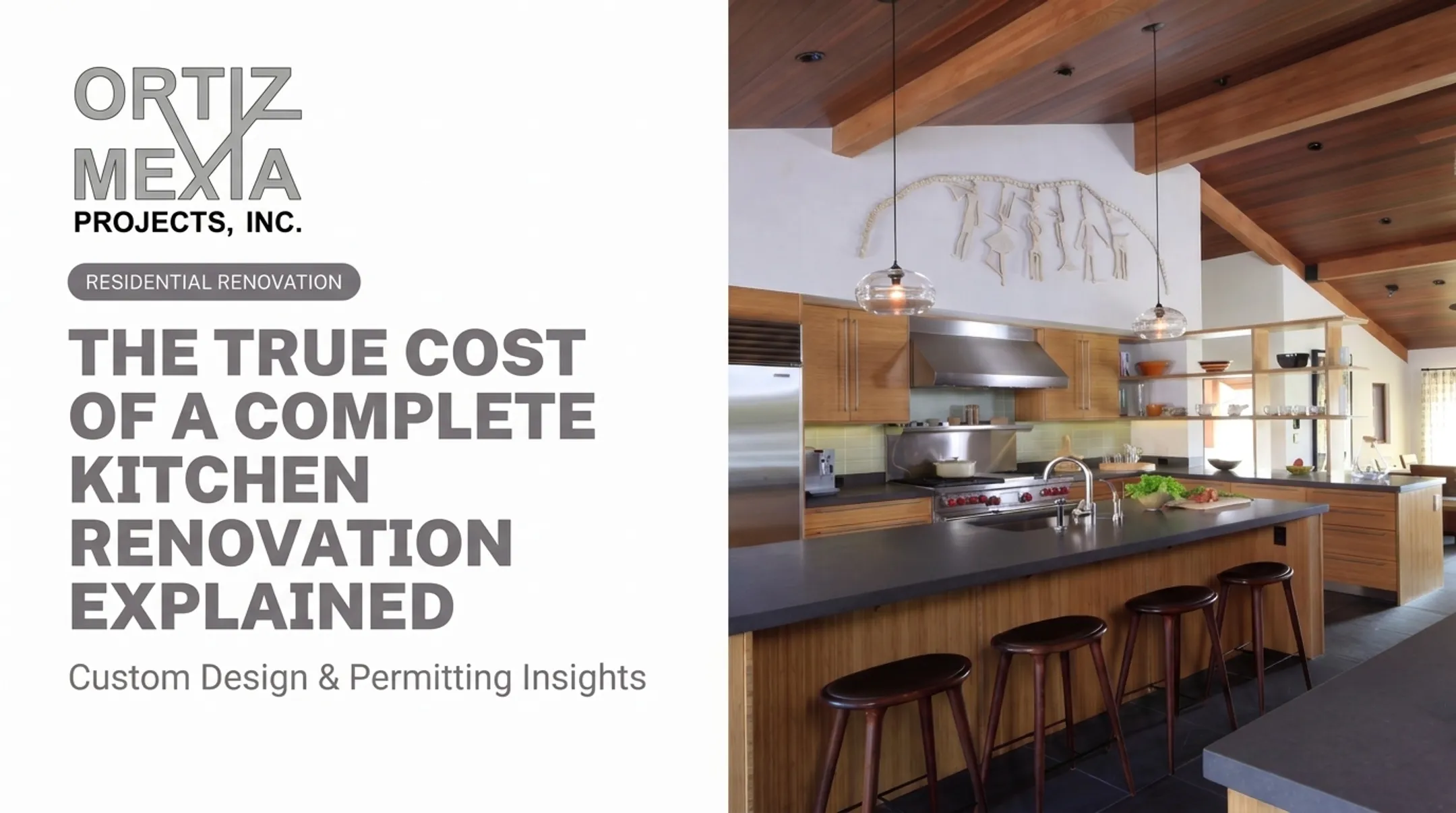
Ortiz Mexia's Snowmass Creek Road project hits this balance: a walnut island with seating, pale green backsplash tile, and open shelving that feels warm and communal instead of trend-chasing.

Key Trend 2: Statement Stone and Artisanal Surfaces
Once the palette warms up, surfaces do the heavy lifting. Full-height backsplashes, book-matched slabs, and waterfall islands remain the main focal-point move. NKBA data puts natural quartzite at 62% for countertops and 61% for backsplashes, just behind quartz (NKBA 2026 Report).
Before you commit to a slab, pressure-test:
- Porosity and etching: marble brings dramatic veining but needs sealing and a willingness to accept patina
- Heat resistance: performance varies widely by stone type
- Fabrication complexity: book-matching needs slab reservation and vein-direction review before cabinet release
- Maintenance: confirm real care requirements with your fabricator, not the stone's marketing name
Handmade tile and Zellige-inspired surfaces add texture, though irregular sizing raises layout and grout coordination.
Treat slab approval, fabrication drawings, and a maintenance agreement as contract milestones, not afterthoughts.

Key Trend 3: Furniture-Like Millwork and Concealed Appliances
Stone sets the stage; millwork finishes the room. Cabinetry is reading more like furniture than boxes. NKBA reports panel-faced dishwashers identified by 85% of designers and panel-faced refrigeration by 72% (NKBA 2026 Report).
Common expressions of the trend:
- Appliance garages and hidden pantries
- Built-in shelving and custom hoods
- Islands sized and detailed like substantial furniture
Concealment only works with earlier coordination. Do not finalize cabinet elevations until the appliance schedule and manufacturer installation drawings are locked.
Ortiz Mexia's Crestmoore Place I shows the standard in practice: tall warm-wood storage, a built-in stainless oven, and a compact coffee station fitted as one assembly rather than bolted-on parts. That same integrated cabinetry approach, from individual furniture pieces to full built-ins, is what this trend requires on a luxury remodel.

Key Trend 4: Performance, Smart Technology, and Wellness-Oriented Features
With the envelope defined, performance decides whether the kitchen works every day. Induction cooking is roughly 5–10% more efficient than conventional electric resistance and about three times more efficient than gas for comparable use (ENERGY STAR).
Split what must be planned early from what can swap later.
Infrastructure (costly to change later):
- Ventilation and makeup-air systems
- Electrical capacity for induction or steam ovens
- Plumbing for beverage centers or wine storage
Gadgets (easier to refresh):
- Touchless faucets
- Smart lighting controls
- App-connected appliance features
The 2024 International Residential Code requires exhaust systems to discharge outdoors, with makeup-air provisions triggered for hoods over 400 CFM. Local amendments vary, so verify with your jurisdiction before locking hood selection.

Key Trend 5: Social, Flexible, and Indoor-Outdoor Kitchen Layouts
Systems and surfaces only pay off if the plan supports how people actually cook and gather. Islands keep growing: Houzz's 2026 study found 52% of upgraded islands now exceed 7 feet, and 53% of newly renovated kitchens measure at least 200 square feet (Houzz 2026 Kitchen Trends Study).
Build the layout around function, not a showroom photo:
- Test circulation first — walk simultaneous prep, cooking, and serving paths before you enlarge anything
- Add a second island only for a real job — separating clean and dirty work, for example
- Connect outdoors with intent — shaded terraces in Los Angeles, winter vestibule logic in the Roaring Fork Valley
Ortiz Mexia's Campbell Drive project pairs a large wood island with glazed doors to a landscaped backyard, treating the outdoor link as part of the working kitchen rather than a backdrop.

What's Driving These Luxury Kitchen Remodel Trends
Several forces are pushing these trends forward at once:
- Technology advances. Appliance connectivity, induction systems, and lighting controls are becoming standard in premium kitchens, though compatibility and long-term serviceability remain open concerns.
- Market demand. Affluent homeowners want kitchens that combine entertaining, wellness, and cooking performance with visual continuity across the home. NKBA projects kitchens above $100,000 will drive 22% of 2025 kitchen and bath industry activity (NKBA Market Outlook).
- Procurement and lead times. NAHB lists appliances and cabinets among the hardest products to source right now, alongside skilled labor shortages (NAHB Remodeling Outlook). Early selection isn't optional anymore.
- Regulatory requirements. Permits, electrical loads, ventilation, and makeup-air rules shape what's buildable. Rules vary by jurisdiction, so don't assume a magazine layout will pass local review.
- Cultural influence. Design media and social platforms raise expectations, but a photographed showroom kitchen was built for a photograph—not your home's architecture or your family's routine.
How These Trends Are Impacting Luxury Kitchen Remodeling
These 2026 kitchen trends push architecture, interiors, engineering, and construction into one coordinated process instead of sequential handoffs.
Project and Workflow Impact
Spec-heavy elements need lock-in earlier in the schedule:
- Custom cabinetry and built-ins
- Stone slabs and finish packages
- Appliances and layered lighting
A documented scope, finish schedule, appliance list, and decision calendar keep those choices off the critical path and prevent costly mid-project changes.
Budget and Investment Impact
Houzz reports a median 2025 spend of $55,000 for a major remodel and $20,000 for a minor one (Houzz 2026 Study). Larger kitchens (250+ sq ft) average $75,000, versus $46,000 for smaller footprints. Layout changes, custom millwork, and infrastructure upgrades all push costs beyond a simple finish-swap.

Homeowner Experience and Long-Term Value
Visual luxury and functional luxury aren't the same thing. JLC's 2025 Cost vs. Value data shows recoupment dropping from 113% for a midrange minor remodel to 36% for an upscale major remodel (JLC Cost vs. Value). Design for daily use and longevity first. Treat resale as a secondary benefit, not the goal.
Professional Coordination and Service Relevance
That level of coordination calls for design-led leadership, not handoffs between separate trades. Ortiz Mexia Projects, Inc. brings together architecture, interiors, cabinetry, and built-in furniture design for high-end residential work in Los Angeles and Colorado's Roaring Fork Valley.
The firm's process (what it calls "singular and detailed orchestration") covers additions, alterations, and permit coordination as part of full-service remodels, from concept through Certificate of Occupancy.
Future Signals for Luxury Kitchen Remodel Trends in the US
Trends will keep shifting. Watch these signals before you commit to a major remodel.
Early indicators: Keep an eye on whether warm palettes, concealed storage, and adaptable layouts continue showing up across designer projects and remodeling data—not just single showrooms.
Technologies to watch:
- Appliance interoperability standards that sync cooking, cooling, and ventilation
- Induction and steam systems with tighter temperature control
- Energy monitoring and water-conservation fixtures that trim utility load
Scenarios for the next 1-3 years:
- A trend-forward kitchen leans into bold color and sculptural stone
- A timeless kitchen uses restrained palettes with easily replaceable accents
- A performance-focused kitchen invests more in infrastructure and workflow than visible finishes
Conclusion
2026 luxury kitchen remodeling comes down to personalization: warmer natural materials, custom integration, real performance upgrades, and layouts built around daily life, not a showroom photo.
Prioritize what improves how you cook, gather, and move through the space—and what fits your home's existing architecture. Then confirm material maintenance, lead times, infrastructure needs, and permitting before construction starts.
If your project involves structural changes, custom millwork, integrated appliances, or complex permitting, bring in an experienced architecture or design team early. Ortiz Mexia Projects coordinates custom residential design, cabinetry, and built-ins through permitting and construction administration, which saves time, money, and rework later.
Edit every trend against how your household actually lives. That filter keeps a 2026 kitchen both current and lasting.
Frequently Asked Questions
How much should a luxury kitchen remodel cost?
Costs vary widely based on kitchen size, layout changes, custom cabinetry, appliances, and location. Houzz reports a 2025 median of $55,000 for major remodels, but custom, high-end projects often exceed $100,000.
What can you get in a luxury kitchen remodel with a $30,000 or $100,000 budget?
At $30,000, expect a targeted refresh: paint or refacing, new hardware, updated backsplash, or one major surface upgrade. At $100,000+, you can cover custom cabinetry, premium stone, and layout changes, though exact scope depends heavily on your home's existing conditions.
What's the most expensive part of a luxury kitchen remodel?
Custom cabinetry, premium appliances, and structural or layout changes typically drive the highest costs, followed by stone fabrication and labor. Design fees and permitting raise the total on full remodels.
Which high-end brands are best for a luxury kitchen remodel?
No single brand wins universally. Compare cooking performance, panel-ready integration, warranty terms, and local service for brands like Sub-Zero, Miele, and Thermador based on your project.
What kitchen colors make a luxury kitchen remodel look expensive?
Sophisticated greens, warm neutrals, natural wood tones, and restrained two-tone schemes look high-end. Lighting quality, hardware, and material coordination matter more than the color choice alone.
What are the luxury kitchen remodel trends for 2026?
The five defining trends are: nature-led palettes and green cabinetry, statement stone and artisanal surfaces, furniture-like millwork with concealed appliances, performance and smart technology features, and flexible social or indoor-outdoor layouts.